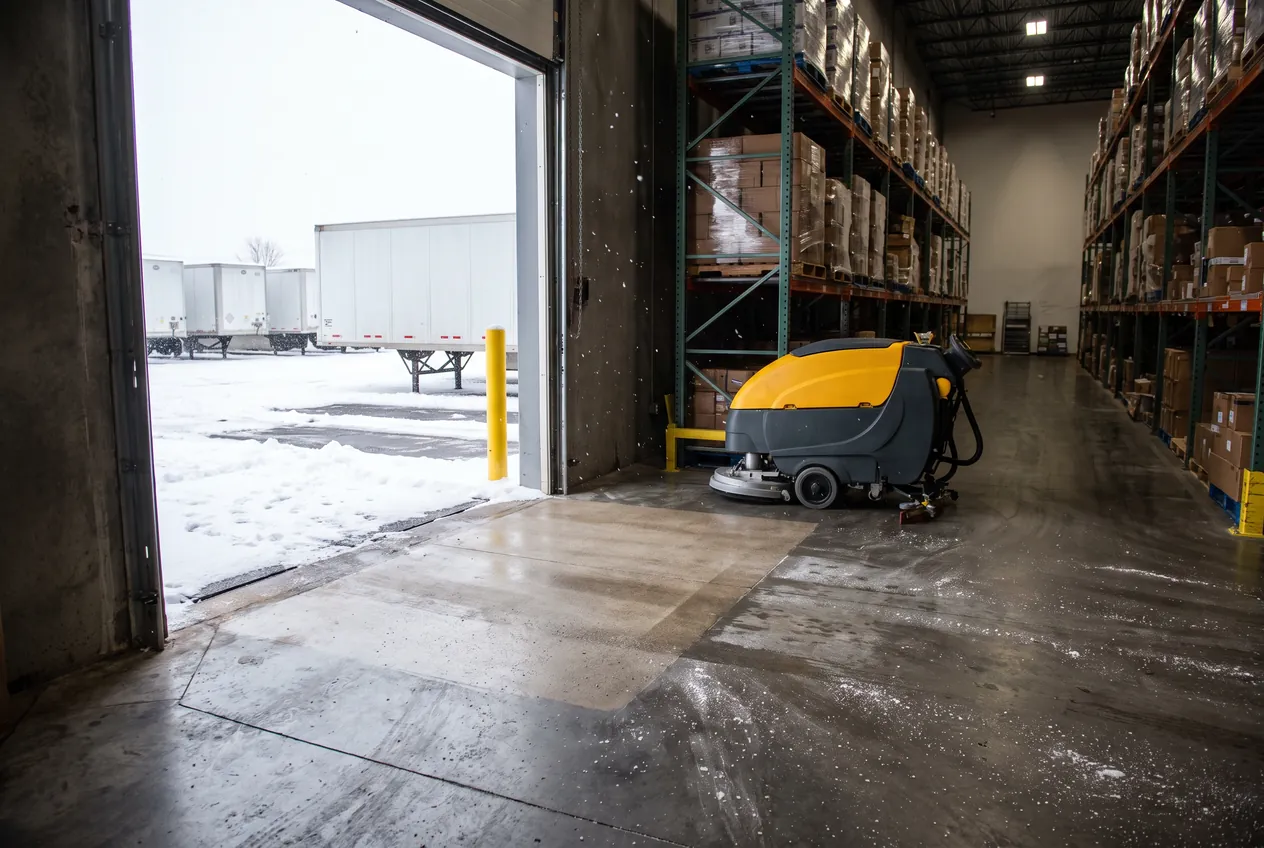
Floor work is the core of most warehouse scopes. On sealed or bare concrete, a ride-on sweeper picks up dust, grit and small debris first, and an auto scrubber follows to wash and squeegee the floor in one pass. Sweeping before scrubbing matters, because loose grit clogs scrubber squeegees and leaves streaks behind. Aisles between racking can be narrow, so the provider may pair a ride-on machine for the main lanes with a smaller walk-behind unit for tight rows and corners.
Dock doors and loading areas collect the worst of the dirt. Pallet splinters, torn shrink wrap, strapping, leaves and mud gather at the doors and get pushed inside by forklifts. Clearing that debris keeps it from spreading down the aisles and helps the site keep walking and working surfaces clean, orderly and free of hazards, as federal workplace safety rules (OSHA) expect. The offices, break rooms, restrooms and locker rooms inside the building get regular janitorial cleaning on a schedule of their own.
High dusting is a separate task done every few months. Dust settles on top of racking, beams, light fixtures and HVAC returns, and it eventually drops onto stored goods or circulates through the air. That work needs lifts and trained operators, so confirm the provider has both before it is booked. A frequent mistake is assuming the crew can clean active zones while forklifts are moving. Crews follow the site's safety rules, wear the required PPE and work in closed-off zones or between shifts.
Keeping Minnesota warehouse floors clean from first snow to spring thaw
Winter does more damage at a warehouse dock than almost anywhere else in a building. Every time a dock door opens between late fall and spring, slush, sand and road salt blow in or drip off trailers and forklifts, and tires carry that mix deep into the aisles. Salt left on concrete builds into a gritty white film that turns slick when wet and wears down sealed surfaces. Many Minneapolis area facilities add more frequent scrubbing at the docks during the colder months and book a thorough floor clean once the snow is gone.
Most warehouses cannot stop for cleaning, so the work is planned around operations. Single-shift buildings are usually cleaned in the evening or overnight once the forklifts are parked. Sites that run around the clock are cleaned zone by zone, with one area taped off, scrubbed and reopened before the crew moves to the next. Requests come from distribution and storage buildings across the metro, from St. Paul and Roseville to Eden Prairie and Plymouth.
Sample warehouse cleaning schedule
| Task | Frequency |
|---|---|
| Dock doors and loading area debris | Daily or each shift |
| Main aisles swept and auto scrubbed | Several times a week to daily |
| Offices, break rooms and restrooms | Daily or several times a week |
| Locker rooms cleaned and restocked | Each working day |
| Extra dock area scrubbing | More often from late fall into spring |
| High dusting of racking, beams and fixtures | Every 3 to 6 months |
| Full floor deep scrub | Every 6 to 12 months |
Read this as a baseline, not a commitment. After walking your office and hearing how people actually use it, your provider will revise it.
Typical scope of work
- Ride-on sweeping of open concrete floors
- Auto scrubbing of aisles and main lanes
- Dock door and loading area cleanup
- Pallet debris and shrink wrap removal
- Office and break room cleaning
- Restroom and locker room cleaning
- High dusting with lifts when scheduled
- Trash and recycling removal
The final task list and schedule get agreed between you and the provider during the quoting process.
What drives the price of warehouse cleaning
- Floor area and layout
- Total square footage sets the base, but open lanes go quickly with a ride-on scrubber while narrow aisles, tight corners and cluttered staging areas slow the work down.
- Operating hours
- A building that empties at night can be cleaned in one pass. Around-the-clock operations need zone-by-zone work, which takes more planning and often more visits.
- Height and access
- High dusting depends on how tall the racking and ceilings are, which lifts are needed, and whether stored goods have to be covered or moved before the work starts.
- Office and support space
- The number of offices, break rooms, restrooms and locker rooms changes the janitorial portion of the job, which is quoted alongside the floor and dock work.
Related services in Minneapolis
Cleaning for other types of business in Minneapolis
- Restaurant Cleaning in Minneapolis
- Church Cleaning in Minneapolis
- School and Daycare Cleaning in Minneapolis
- Industrial Cleaning in Minneapolis
Service areas
Businesses throughout the Minneapolis area send us warehouse cleaning requests, including from Downtown Minneapolis, North Loop, Northeast Minneapolis, Uptown, St. Paul, Bloomington and beyond. See all areas.