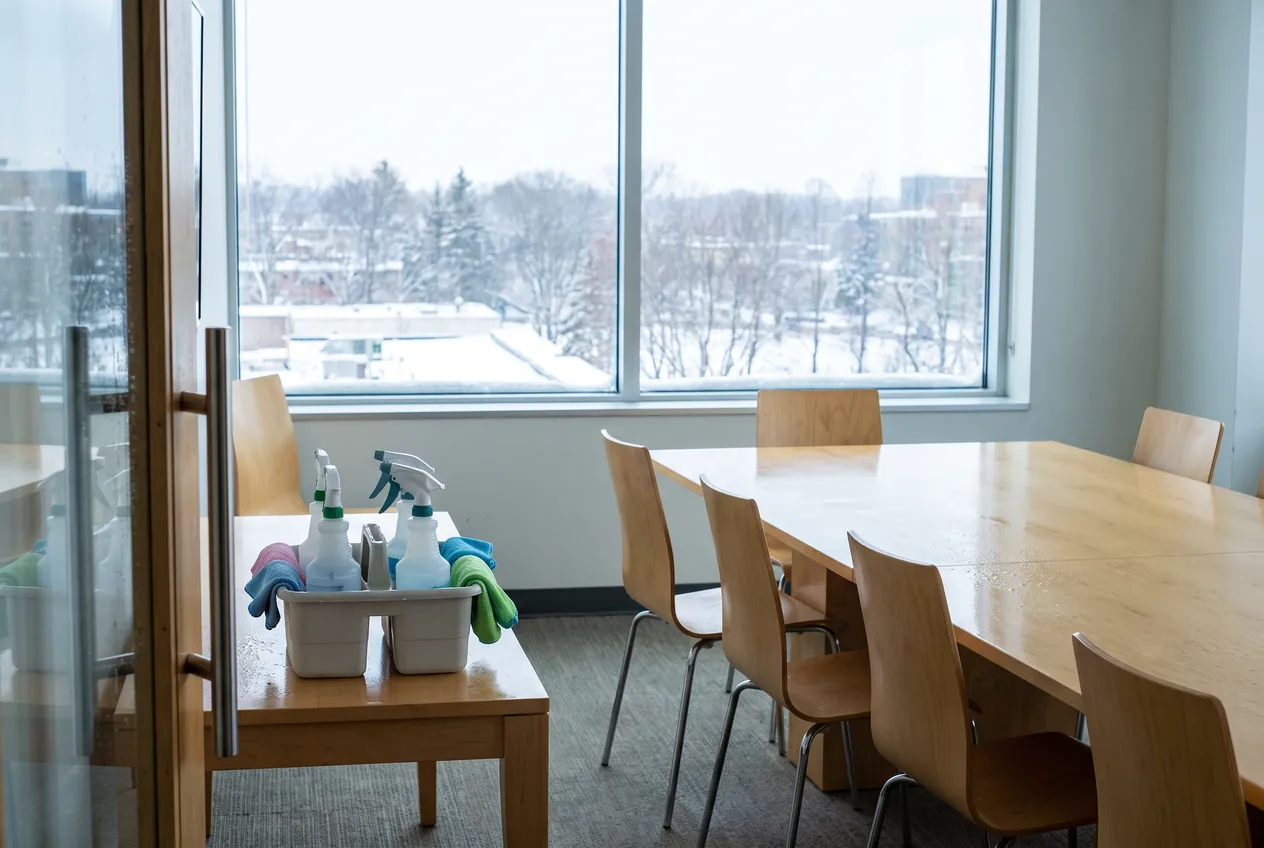
Cleaning comes before disinfecting, every time. Dust, grease and film form a layer that keeps disinfectant from reaching the surface underneath, so the crew wipes surfaces with a cleaner first and only then applies the disinfectant. Products sold for this purpose in the United States are registered with the EPA, and each label lists a contact time, sometimes called dwell time. That is how long the surface has to stay visibly wet for the product to work as labeled.
Contact time is the step most often cut short. A crew that sprays and immediately wipes dry has cleaned the surface but has not followed the label. Electrostatic sprayers put a charge on the spray so it wraps around handles, chair arms and other curved surfaces, which improves coverage across large rooms. They save time, but the label still applies, and the surface still needs to stay wet for the full contact time. Heavy-use touch points often get a hand wipe as well.
Know what this service is not. Routine commercial disinfection is regular upkeep for offices, clinics, gyms, schools and shared spaces. Blood and other biohazard cleanup, crime scene cleanup, sewage backups and flood damage are handled by specialist remediation companies with their own training, equipment and disposal rules. A standard cleaning crew should not take those jobs. Be wary of any provider that promises a disinfected space will stop people from getting sick, since no cleaning service can guarantee that.
Disinfecting high-touch areas in Twin Cities buildings
When Minnesota winter keeps people inside for months, the same door handles, elevator buttons and break room counters get touched far more often. Skyway-connected towers in Downtown Minneapolis funnel steady traffic through shared doors, restrooms and elevators all day, and those points are where a disinfection routine pays off. Clinics and medical offices across the Twin Cities, schools and multi-tenant offices in St. Paul and the suburbs often ask for disinfection on each visit through the colder months, rather than treating it as an occasional extra service.
Most disinfection is scheduled after hours alongside regular cleaning, since surfaces need to stay wet without people touching them. Buildings with steady daytime traffic, such as offices in Bloomington, Edina and Minnetonka with shared lobbies and restrooms, often add midday touch point wipes by a day porter as well. When you describe the space, list the shared areas and roughly how many people use them each day, so the provider can size the routine properly.
What changes the cost of disinfection service
- Size and layout
- Total area matters, but the number of rooms, restrooms and shared spaces matters more, since each one adds touch points that need cleaning and a disinfectant left wet for its contact time.
- Frequency
- Disinfection on every visit is priced differently from a monthly or one-time service. Many buildings combine nightly touch point work with periodic electrostatic spraying of larger areas.
- Type of facility
- Clinics, gyms and childcare spaces often need more surfaces covered and a stricter routine than a quiet office, and some require specific products their staff already use.
- Equipment and products
- Electrostatic sprayers, specialty disinfectants and products with short contact times all change the labor and supply side of the quote. Ask which products the provider plans to use.
Sample disinfection schedule
| Task | Frequency |
|---|---|
| Door handles, push plates and light switches | Each cleaning visit |
| Restroom fixtures, faucets and dispensers | Each cleaning visit |
| Break room counters, sinks and appliance handles | Each cleaning visit |
| Elevator buttons and stair railings | Daily in busy buildings |
| Shared desks, phones and conference tables | Daily to weekly |
| Electrostatic spraying of larger areas | Weekly to monthly, as needed |
Read this as a baseline, not a commitment. After walking your office and hearing how people actually use it, your provider will revise it.
Typical scope of work
- Cleaning surfaces before applying disinfectant
- EPA-registered disinfectant used per its label
- High-touch points throughout the building
- Restroom and break room fixtures
- Elevator buttons, railings and door hardware
- Electrostatic spraying where it fits the space
- Shared equipment and conference room tables
The final task list and schedule get agreed between you and the provider during the quoting process.
Service areas
Businesses throughout the Minneapolis area send us disinfection requests, including from Downtown Minneapolis, North Loop, Northeast Minneapolis, Uptown, St. Paul, Bloomington and beyond. See all areas.
More cleaning services in Minneapolis
- Commercial Cleaning in Minneapolis
- Office Cleaning in Minneapolis
- Janitorial Services in Minneapolis
- Medical Office Cleaning in Minneapolis
- Floor Care in Minneapolis
- Post-Construction Cleaning in Minneapolis
- Day Porter Services in Minneapolis
- Commercial Carpet Cleaning in Minneapolis
- Commercial Window Cleaning in Minneapolis
- Commercial Pressure Washing in Minneapolis