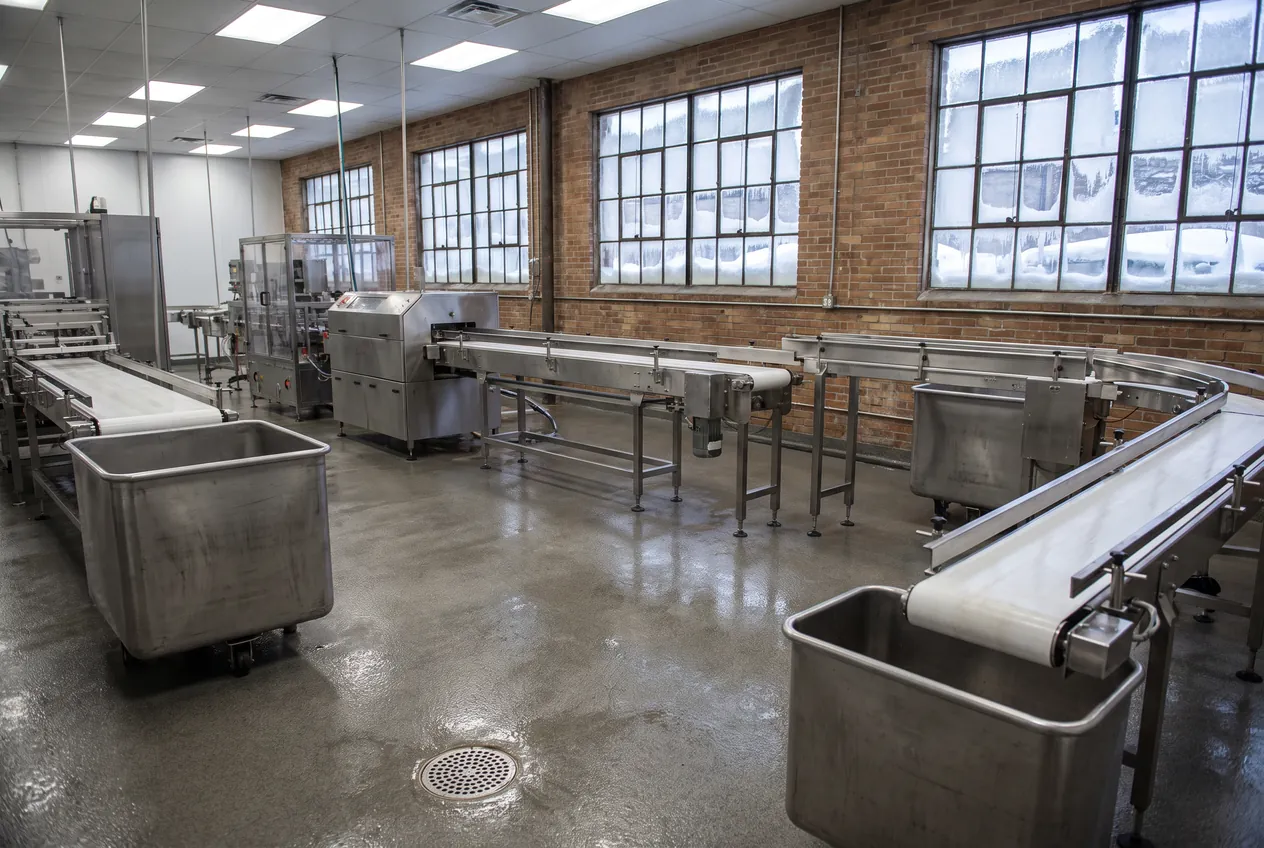
Production floors get dirty in a different way than storage space. Oil, cutting coolant and grease drip from machines and mix with metal fines and dust into a film that makes concrete slippery and stains it. Degreasing means applying a cleaner suited to that soil, letting it work, then scrubbing with an auto scrubber or deck brush and picking up the dirty solution instead of spreading it around. Areas under and beside machines usually need hand work, since a scrubber cannot reach every corner.
There is a clear line between what a cleaning crew does and what it does not. The crew cleans around equipment and wipes machine exteriors such as guards and panels. Anything inside a machine or on equipment that could start up is handled under the plant's lockout/tagout procedures by maintenance staff or specialist industrial contractors. Hazardous waste, chemical spills, tank cleaning and hydroblasting are specialist industrial services, not commercial cleaning, and they should be hired separately.
In plants that produce fine dust, keeping it off ledges, beams, ductwork and light fixtures is a safety matter as well as appearance, so high surfaces belong on the schedule instead of waiting until dust is visible. Break rooms, locker rooms, restrooms and offices need steady janitorial cleaning, since workers coming off the floor bring grease and grime with them. Expect any provider to attend site safety orientation and wear the PPE the plant requires before the first shift.
What Minnesota winters mean for plant floors and locker rooms
Manufacturing plants in Minnesota deal with winter at every door. Workers walk in with salt, sand and slush on their boots, and that mix lands first in entries and locker rooms before it spreads onto the production floor. When salt grit meets oil or coolant, the result is a sticky, slippery layer that is harder to lift than either one alone. From late fall into spring, many plants around Minneapolis add extra mopping in entries and locker rooms and more frequent scrubbing where foot traffic meets the production floor.
Plant cleaning follows the production schedule. Break rooms, restrooms and offices can be cleaned during a shift, while floor degreasing usually happens between shifts or on a weekend when lines are quiet. Larger projects such as high dusting and a full floor clean are often saved for a planned shutdown. Requests come from production sites across the metro, including St. Paul, Plymouth, Eden Prairie and Roseville.
Sample industrial cleaning schedule
| Task | Frequency |
|---|---|
| Break rooms, locker rooms and restrooms | Daily on production days |
| Production aisles and walkways degreased | Daily or each shift |
| Floor around machines scrubbed by hand | Several times a week |
| Machine exteriors and guards wiped | Weekly, with the plant's approval |
| Dust removed from ledges, beams and fixtures | Monthly to quarterly, depending on the process |
| Full floor deep clean | During planned shutdowns |
Read this as a baseline, not a commitment. After walking your office and hearing how people actually use it, your provider will revise it.
Typical scope of work
- Production floor degreasing and scrubbing
- Cleaning around machines and workstations
- Machine exterior wipe-downs
- Dust removal from ledges and beams
- Break room and locker room cleaning
- Restroom cleaning and restocking
- Plant office cleaning
- Trash removal from common areas
The final task list and schedule get agreed between you and the provider during the quoting process.
What moves the price of plant cleaning
- Type of soil
- Light dust is quicker to remove than oil, coolant and metal fines. Heavy grease takes more degreaser, more scrubbing and more passes to recover the dirty solution.
- Equipment density
- Open floors go fast with a scrubber. Floors crowded with machines, conveyors and workstations need more hand cleaning around bases and in tight gaps between equipment.
- Shift and shutdown timing
- Cleaning between shifts, on weekends or during a short shutdown may need a larger crew to finish in the time the plant allows, which affects the quote.
- Safety requirements
- Site orientation, required PPE, escort rules and permits for lifts or high work all add time, especially when the plant has detailed procedures for outside crews.
Related services in Minneapolis
- Janitorial Services in Minneapolis
- Floor Care in Minneapolis
- Post-Construction Cleaning in Minneapolis
Cleaning for other types of business in Minneapolis
- Restaurant Cleaning in Minneapolis
- Church Cleaning in Minneapolis
- School and Daycare Cleaning in Minneapolis
- Warehouse Cleaning in Minneapolis
Service areas
Businesses throughout the Minneapolis area send us industrial cleaning requests, including from Downtown Minneapolis, North Loop, Northeast Minneapolis, Uptown, St. Paul, Bloomington and beyond. See all areas.