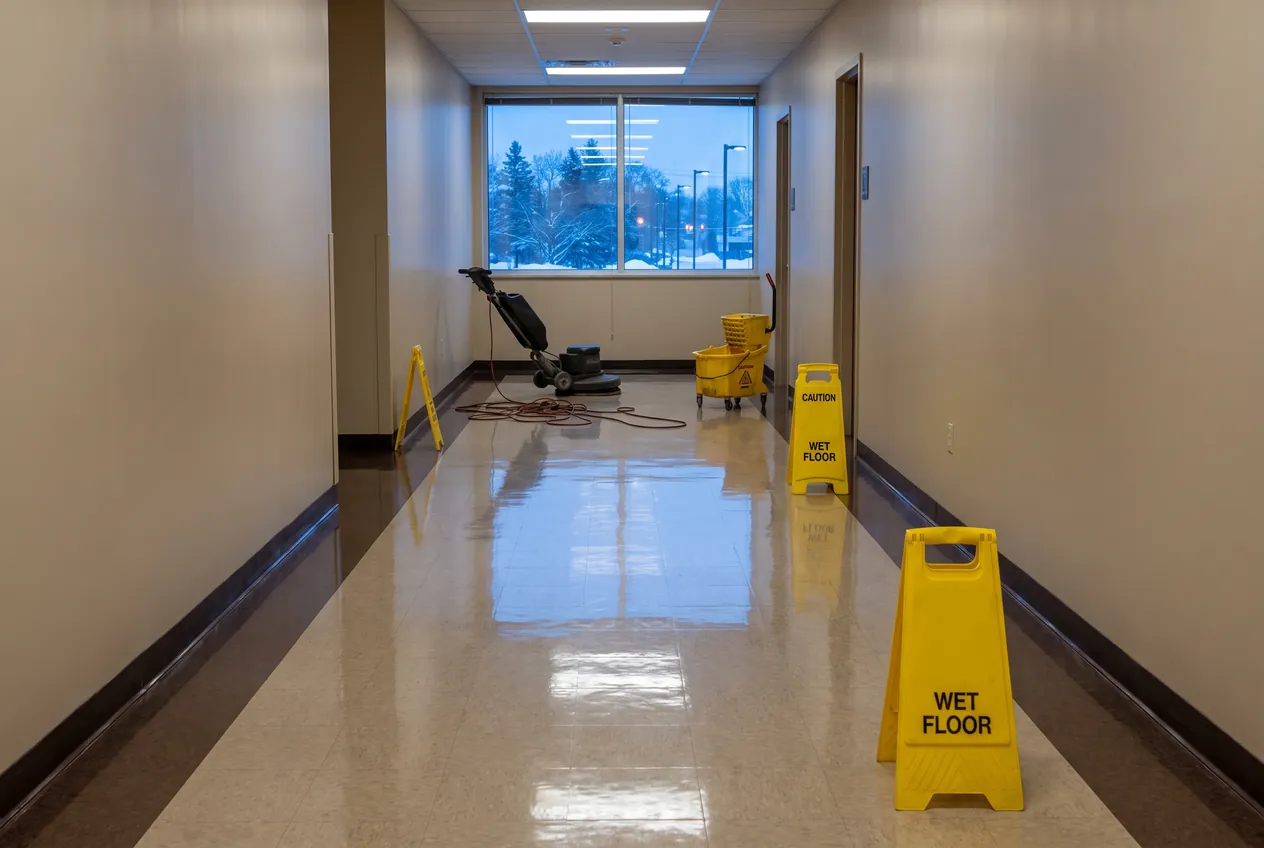
What strip and wax actually means
Despite the name, most commercial floors are not waxed anymore. The coating on vinyl composition tile, the hard tile common in corridors, break rooms and retail aisles, is usually an acrylic floor finish. It wears down under foot traffic, holds scratches and ground-in dirt, and turns cloudy or yellow as old layers build up. Stripping takes all of it off down to bare tile so fresh coats go onto a clean surface.
A full strip is not the same as a scrub and recoat. In a scrub and recoat, the crew scrubs away the worn top layer of finish and adds one or two new coats without going down to the tile. That lighter service carries a floor through most of the year, and the full strip is saved for when the finish is too worn, discolored or built up to rescue.
The process, step by step
A full strip is a long, wet job, and skipped steps are what leave a floor patchy, tacky or peeling a few weeks later. The order below is the standard method for vinyl composition tile. How long it takes depends mostly on the square footage, how many layers of old finish are on the floor and how quickly the room dries.
- Move furniture, bins and mats out of the area
- Dust mop to pick up loose grit
- Set out wet floor signs and close off the room
- Apply stripper and let it dwell as the label directs
- Scrub with a low-speed floor machine and stripping pad
- Pick up the slurry with a wet vacuum
- Rinse, often twice, and neutralize the floor
- Let the floor dry completely
- Apply thin coats of finish, often 3 to 5, drying between coats
- Burnish later with a high-speed machine if the finish is made for it
How often floors need stripping
Traffic sets the schedule. A quiet office corridor can go a long stretch between full strips, while a busy entrance, cafeteria or retail aisle wears through its finish much faster. Most buildings combine routine daily care, periodic scrub and recoat visits and a full strip once or twice a year, adjusting the timing to how the floor actually looks rather than following the calendar alone.
| Service | What it does | Typical timing |
|---|---|---|
| Dust mop and damp mop | Removes grit before it scratches the finish | Each cleaning visit |
| Entry mat care | Keeps grit and water off the finish | Each cleaning visit |
| Burnishing | Brings back shine on finishes made for high-speed machines | Set by traffic and finish type |
| Scrub and recoat | Removes surface wear and adds fresh coats | Between full strips |
| Full strip and refinish | Removes all finish down to the tile | Often yearly or twice a year |
Floors that should not be stripped
Not every hard floor is a candidate. Many luxury vinyl tile and plank products, and floors sold as no-wax, have a factory wear layer that stripper can damage or that the maker says should not be coated at all. Stripping one of these floors can void its warranty and leave it looking worse than before. Stone, wood and sealed concrete follow their own maintenance methods too.
Before booking, find the flooring maker's maintenance guidance or check the building records for the product that was installed. A capable provider will ask what the floor is and look at it before quoting. When nobody can say for sure, a small test patch in a closet or corner is a safer first move than committing the entire floor.
Scheduling around a Minneapolis winter
Road salt, sand and slush wear floor finish hard in Minneapolis. Salt leaves a white film that dulls the finish, and the grit acts like sandpaper along the paths from the doors. That is why many buildings across the metro schedule floor care around the end of winter, once the salt season has passed, instead of refinishing in late fall and watching the entrances wear through again before spring.
Ventilation is the other winter problem. Stripper and fresh finish need moving air to dry properly, and in the coldest months it is harder to ventilate a space without pulling in freezing air. In skyway-connected buildings, where foot traffic runs through most of the day, the work usually lands on weekends or long overnight windows so the final coat can cure before anyone walks on it.
Planning the job with the provider
Ask the provider how many coats they plan to apply, which stripper and finish they use, and whether the price covers moving furniture. Confirm how long the floor must stay closed before traffic returns and who puts the room back together. On a large floor, splitting the work into zones over several nights keeps part of the space usable while the rest dries.
Clear the area of anything that cannot get wet, including power cords, boxes on the floor and items stored under desks. Tell staff the schedule, since the room will be closed and slippery while the work is underway. The morning after, walk the floor in good light and look for streaks, puddled edges, dull patches or spots where the finish did not bond.