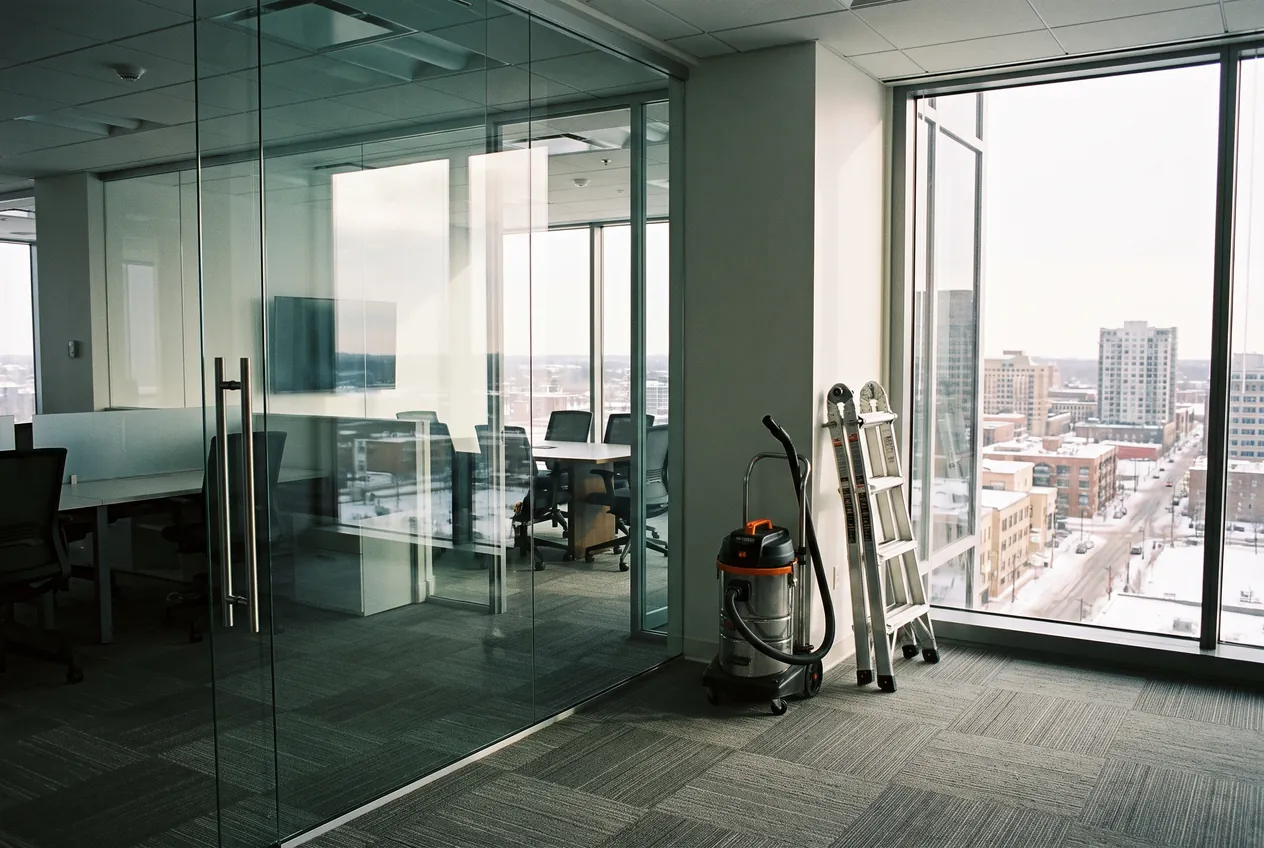
Why construction dust needs its own plan
Drywall sanding and concrete cutting produce dust fine enough to hang in the air for hours and keep settling long after the tools are packed up. It works into return grilles, light lenses, window tracks, the tops of door frames and the inside of new cabinets. A regular janitorial visit tends to move that dust around rather than remove it, which is why the first week in a new space can look worse than turnover day.
Dry dusting with a cloth or duster lifts the fine particles back into the air, where they drift down onto surfaces that were already wiped. Crews that handle this work well rely on HEPA-filtered vacuums with brush attachments for ledges and vents, then follow with damp microfiber to trap what the vacuum missed. Working from the top of the room to the floor keeps finished surfaces from collecting a second layer.
The phase-by-phase checklist
Most commercial build-outs need all three passes, although a light refresh with little sanding can sometimes fold the rough and final cleans into one visit. Treat the table as a starting scope for your project. Strike the lines that do not apply, add any rooms with special finishes, and hand the same version to every provider you ask to quote.
| Task | Phase | Notes |
|---|---|---|
| Bulk scraps and packaging gathered | Rough clean | Haul-off usually sits with the general contractor |
| HEPA vacuum ledges, frames and high surfaces | Rough clean | Repeated during the final clean |
| Vent covers and return grilles vacuumed and wiped | Final clean | Filter changes belong to the HVAC contractor or building |
| Light fixtures and lenses dusted | Final clean | Fixtures switched off before opening |
| Window glass, frames and tracks | Final clean | Labels and film removed first |
| Stickers, labels and protective film removed | Final clean | Follow the manufacturer's care guidance |
| Paint and adhesive drips removed | Final clean | Scraper and product matched to the surface |
| Cabinet and drawer interiors wiped | Final clean | Dust settles inside even with doors shut |
| Restroom fixtures, partitions and mirrors | Final clean | New fixtures may carry protective coatings |
| Floors cleaned for their finish | Final clean | New resilient tile may need finish applied |
| Touch points, glass doors and a last floor pass | Touch-up | Right before furniture or staff arrive |
Settle the scope with the general contractor
Most arguments over construction cleanup start with a task nobody owned. Before the first pass, walk the space with the general contractor and the punch list in hand, then put the split of work in writing. The cleaning company needs to know which areas are finished, which items are still open, and where the trades plan to come back after the final clean is done.
- Who removes debris and supplies the dumpster
- Whether power, water and lighting will be on
- Working hours, elevator use and loading dock access
- Site safety rules, protective gear and sign-in
- Which punch list items remain open
- Who replaces HVAC filters after the work
- Where the crew can stage equipment and draw water
Surfaces that need extra care
Fresh finishes are easy to damage. A razor scraper can scratch some coated glass, an abrasive pad can mark brushed metal, and a strong solvent can dull new paint or laminate. Before removing paint specks, adhesive or label residue, the crew should read the manufacturer's care guidance for each surface and test a small hidden spot whenever that guidance is unclear or missing.
Floors deserve a separate conversation. New vinyl composition tile may need several coats of finish applied before it takes regular traffic, sealed concrete calls for a neutral cleaner and a soft pad, and new carpet needs a thorough vacuuming with attention to the seams and edges where dust gathers. Ask the flooring installer what each floor needs before the final clean goes on the calendar.
Build-outs in Minneapolis buildings
Office renovations and tenant build-outs happen all over the area, from downtown towers on the skyway to creative space in the North Loop and suburban office parks in Bloomington and Eden Prairie. When a renovated floor sits in an occupied building, the dustiest cleaning steps usually move to evenings and weekends, and keeping dust contained at doorways and elevator lobbies matters as much as the cleaning itself.
Winter adds a step to the checklist. Trades walking in and out carry road salt, sand and slush onto new floors during the job, and that grit scratches fresh finish and stains new carpet near the entrance. Protecting the entry paths during construction, then scheduling an entrance-focused floor clean as part of the touch-up, keeps a winter turnover from opening with salt film on brand-new tile.
Running the final walkthrough
The last step is a walkthrough with whoever will accept the space. Go room by room with the checklist, look up at vents and fixtures, run a hand along ledges and window tracks, and open a few cabinets and drawers. Write down anything missed so the crew can correct it before move-in instead of leaving it for the first nightly cleaning to find.
Once tenants are in, regular janitorial service takes over. Fine dust can keep drifting out of the ductwork for a while after a project, so tell the ongoing cleaning provider that the space is newly finished. Ask for extra attention to high dusting, vent covers and light fixtures during the first few weeks, until the surfaces stop collecting fresh dust.